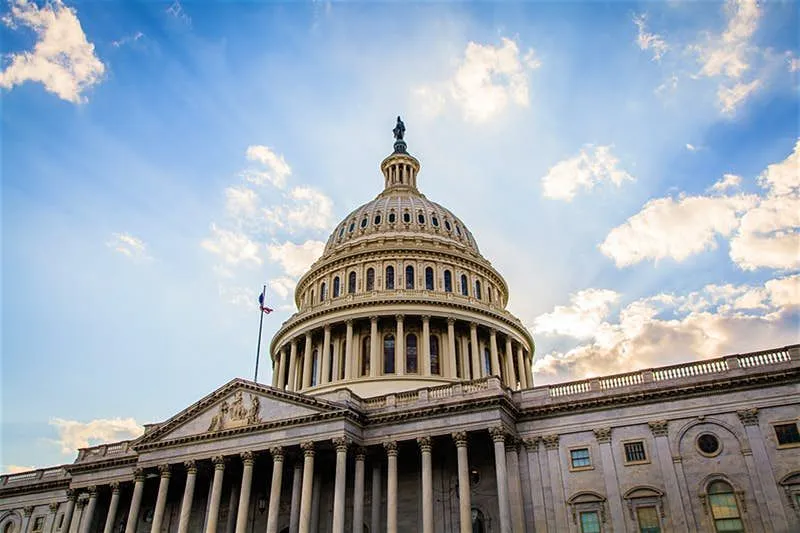
The United States Senate has passed a major housing bill that includes a provision preventing the Federal Reserve from issuing a central bank digital currency until at least the end of 2030. The measure was approved with strong bipartisan support, passing by a vote of 89 to 10. Although the legislation primarily focuses on housing policy, the addition of a clause restricting the development of a government backed digital dollar has drawn significant attention from policymakers and the digital asset industry. The proposal now faces uncertainty as it moves to the House of Representatives, where lawmakers must decide whether to approve the measure in its current form.
The clause within the legislation explicitly prohibits the Federal Reserve from creating or issuing a central bank digital currency either directly or indirectly through financial institutions or other intermediaries. The provision was included in the final section of the bill, which spans more than three hundred pages of policy proposals related to housing and financial oversight. Supporters of the restriction argue that any decision to introduce a government issued digital currency should require direct approval from Congress rather than being implemented through regulatory authorities.
Central bank digital currencies have been a subject of debate in the United States for several years. While many countries have explored or launched pilot programs for digital versions of their national currencies, the United States has largely remained in a research phase. Policymakers and financial experts have discussed the potential benefits of a digital dollar, including faster payment systems and improved financial infrastructure. However, concerns about privacy, government oversight, and competition with private sector financial innovations have slowed the development of such initiatives.
Some lawmakers supporting the ban have expressed concerns that a government controlled digital currency could allow authorities to monitor financial transactions more closely than traditional payment systems. Advocates for restricting CBDCs argue that financial privacy is an essential part of personal freedom and that the introduction of a state issued digital currency could expand government control over financial activity. These concerns have been frequently raised by critics who believe digital payment innovation should remain primarily within the private sector.
Industry organizations and digital asset advocates have welcomed the Senate’s decision, stating that private sector innovation in blockchain based payments should remain the main driver of digital financial technology in the United States. Supporters of the provision argue that stablecoins and other privately issued digital assets already provide many of the benefits that a government issued digital currency might offer, including faster transactions and programmable financial services built on blockchain networks.
Despite the strong support in the Senate, the legislation still faces an uncertain path forward. The House of Representatives must decide whether to adopt the bill in its current form or propose amendments that could alter the CBDC provision. Political factors could also affect the outcome, as broader debates about election policy and other legislative priorities may influence the timeline for approving the measure. If the House approves the bill, it would then move to the president for final consideration.
The debate surrounding central bank digital currencies highlights the growing importance of digital payment systems in global financial policy discussions. Governments around the world are evaluating how blockchain technology, stablecoins, and digital currencies might reshape financial infrastructure and international payment networks. In the United States, the outcome of this legislative effort could play a significant role in determining whether the country pursues a government issued digital currency or continues relying primarily on private sector innovation within the digital asset ecosystem.