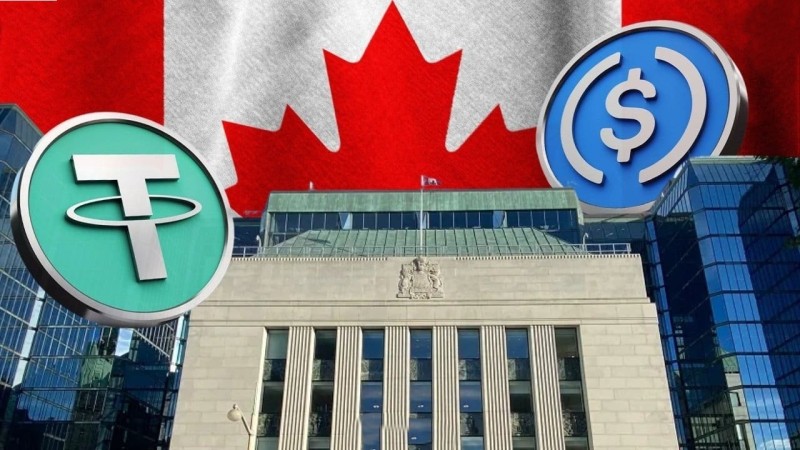
Introduction to Stablecoins
Stablecoins have become the market’s go-to instrument for moving value on-chain while keeping price swings closer to what traders expect from cash. In financial markets, their appeal is practical: consistent unit of account, fast settlement, and 24/7 availability across venues that never close. The J.P. Morgan Private Bank framing is straightforward: these tokens are not designed to outperform; they are designed to behave predictably. That design choice matters because stablecoins increasingly sit at the center of liquidity, margin flows, and cross-border funding for crypto-native desks and a growing set of institutional participants. Their growth has also raised the bar for disclosures, reserves quality, and the way participants measure stability under stress.
How Stablecoins Work
Operationally, a stablecoin is a claim whose credibility depends on how issuance, redemption, and reserves interact minute by minute. Users typically mint or acquire tokens, deploy them across exchanges, wallets, and settlement rails, and then redeem back into fiat or other assets when needed. The mechanism is only as strong as the redemption channel and the issuer’s ability to meet it at scale. Market structure matters here: stablecoins function as trading collateral, a quote asset, and a bridge between venues with different banking access. Coverage of tokenized settlement has shown why this utility keeps expanding, including experiments highlighted in Nasdaq’s token testing. For real-time market context, the CoinDesk stablecoin section tracks how issuers and exchanges operationalize these flows.
Stablecoin Pegging Mechanisms
The pegging mechanism is the match-day officiating of stablecoins: it is judged on consistency, transparency, and how it holds up when the crowd surges. Fiat-backed models lean on high-quality liquid reserves and clear redemption rules; their peg is defended by the promise that one token can be turned into one unit of currency with minimal friction. Crypto-collateralized designs defend the peg with overcollateralization and automated risk controls, while algorithmic approaches attempt to balance supply and demand with incentives that can weaken under pressure. What separates resilience from fragility is not marketing, but the chain of custody for reserves, valuation practices, and the timing of redemptions. Reporting on reserve scrutiny, including USDT’s audit developments, underscores how credibility is built through verification rather than narratives.
Use Cases in Financial Markets
Stablecoin use cases in financial markets are now defined less by novelty and more by execution: funding, hedging, settlement, and collateral optimization. Desks use them to rotate risk quickly between exchanges, to post margin without waiting for banking cutoffs, and to keep capital agile during volatility spikes. Stablecoins also support tokenized asset rails, where cash-like instruments are needed to complete atomic delivery-versus-payment. This is why tokenization and stablecoin plumbing are increasingly discussed together, as seen in how stablecoins intersect with tokenized banking. The speed advantage is real, but so is the operational burden: compliance screening, wallet risk, and concentration exposure to a small number of issuers. For broader industry coverage of trading and settlement adoption, Cointelegraph’s market reporting frequently tracks how exchanges and payment firms deploy stable rails.
Future Implications and Challenges
The next phase is being shaped by regulation, central-bank adjacency, and the market’s tolerance for opacity. Jurisdictions are tightening rules on reserves, governance, and consumer protections, pushing issuers toward higher-quality assets and clearer reporting. At the same time, policymakers are weighing what stablecoins should be allowed to do inside the payments stack, especially where bank deposits and e-money already set expectations for finality. European signaling has been blunt about the scaling question, and the ECB’s view on central bank money reflects a broader theme: stability is easier to promise than to guarantee in a crisis. Challenges remain: de-pegs can happen via liquidity gaps, operational outages, or confidence shocks; market participants must price issuer risk, custody risk, and legal risk as deliberately as they price basis and volatility.