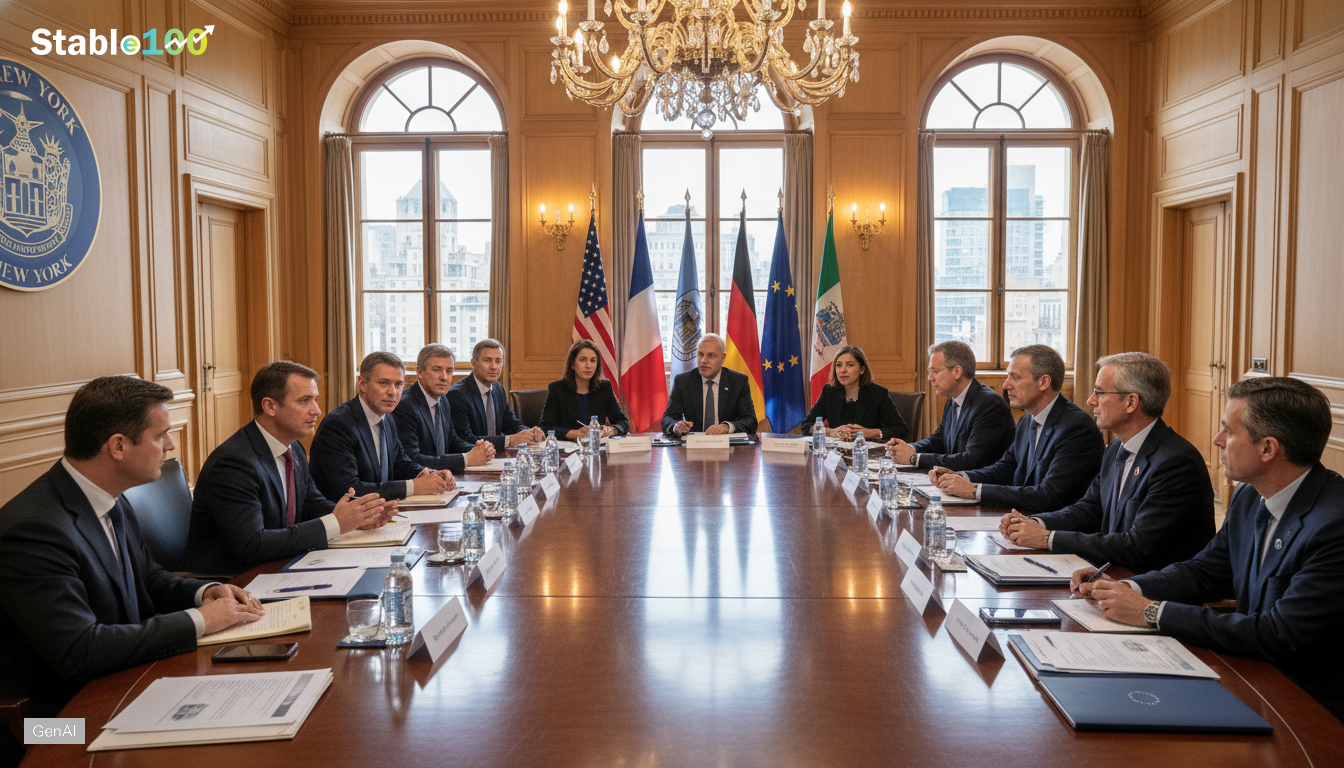
Stablecoin Regulation Coordination: NY and EU Collaborate
New York regulators and European supervisors are signaling interest in moving from parallel oversight toward more coordinated scrutiny of fiat backed tokens used in payments and trading, as indicated by available reports. In these stablecoin regulation updates, officials have described such coordination as a practical response to cross border issuance structures and reserve management that can span multiple jurisdictions. The stated aim is comparable disclosures and more aligned supervisory expectations for issuers active on both sides of the Atlantic. References to the EU finance watchdog and the NY financial authority suggest tighter routines, such as clearer channels for supervisory contact and more consistent expectations for how firms demonstrate compliance across markets.
Scope of the Joint Monitoring Agreement
The precise scope has not been published, but the cooperation is generally discussed as covering information sharing, exam coordination, and a more standardized view of reserve, custody, and redemption controls for major stablecoin operators, according to industry observers. Regulators are said to be exploring alignment on what evidence is acceptable for audit trails so teams can verify controls without duplicating identical fieldwork. Recent scrutiny in Brussels, including Wise faces money laundering investigation in Brussels, is part of the backdrop cited by some commentators for why supervisors want clearer touchpoints and faster escalation routes during cross border reviews.
Supervisory Data, Audits, and Custody Expectations
For issuers, a likely impact of closer NY/EU regulator coordination is tighter timelines for producing data packages that satisfy both sides, especially around reserve composition, liquidity, and reconciliation practices, according to professionals tracking stablecoin oversight. CoinDesk covered institutional custody demand in Zodia CEO on bank digital asset custody. Market participants also expect more consistent language in public attestations and risk disclosures, which could influence how exchanges and payment firms decide what tokens to support. As updates continue, firms with EU distribution but New York based operations may face closer checks on custodial arrangements and segregation of client assets.
Policy Impact on Listings, Payments, and Risk Controls
The collaboration is viewed by policy analysts as a signal to legislators and central bank stakeholders debating responsibilities between prudential supervision, market conduct, and payments oversight. Coordinated supervision could reduce regulatory arbitrage, where an issuer routes activities through the least restrictive jurisdiction while still serving users globally. Market participants expect supervisors to emphasize more consistent expectations on redemption rights, reserve safekeeping, and governance around mint and burn processes. These updates may affect exchange listing committees and payment integrations, particularly where tokens interact with major rails. For product and distribution context, see Movement Expands Stablecoin Payments to Major Rails and Stablecoin tokenization: Franklin Templeton, MoonPay.
Forecasting Global Stablecoin Regulation Trends
Looking ahead, supervisors may use any NY/EU coordination as a template for other jurisdictions, according to industry commentators, especially markets with large user bases but limited local issuer presence. The next phase may focus on reserve asset concentration, custodial risk, and the legal enforceability of redemption promises across borders, with clearer triggers for deeper reviews when on chain activity diverges from reported reserves. For a parallel policy angle, Japan rules shift for yen-denominated stablecoins illustrates how other regions are tightening frameworks as updates are integrated into playbooks. Firms that invest early in unified reporting, audit readiness, and governance documentation may face fewer surprises if informal routines harden into regular supervisory practice.