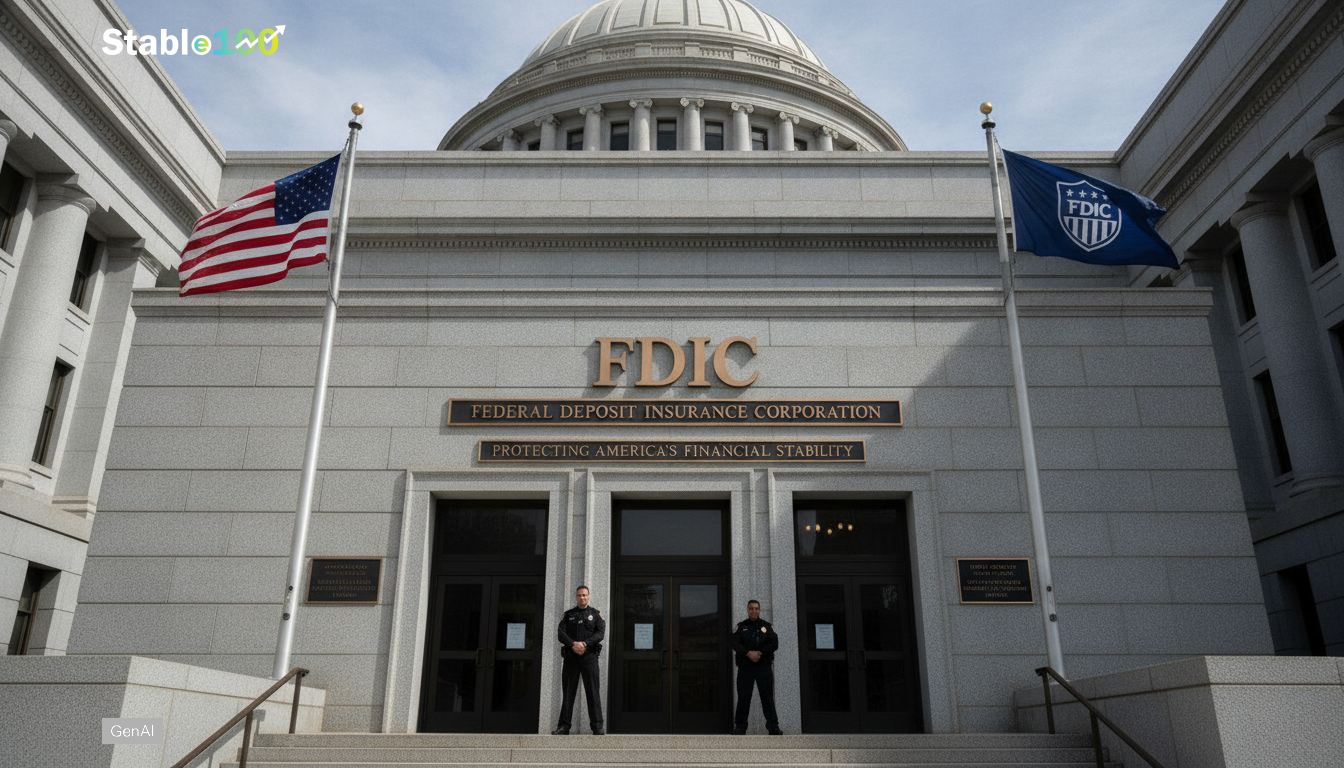
Crypto regulation: GAO calls for tighter FDIC coordination
Crypto regulation is under renewed scrutiny after the US Government Accountability Office urged federal banking supervisors to better align oversight of digital asset activity in insured institutions, according to available reports. The GAO indicated that the Federal Deposit Insurance Corporation should coordinate more closely with peer regulators so supervisory expectations for banks are clearer and more consistent when payments, custody, and token networks intersect. The intent, as described by the GAO, is to reduce potential supervisory gaps that can arise when agencies assess similar risks using different approaches. The near term goal is framed as improved consistency within current frameworks rather than a wholesale rewrite of statutes, based on the report’s characterization of its recommendations.
Where regulators see blockchain risks in bank operations
The GAO report describes how blockchain risks could migrate into areas tied to deposits, reserves, and payment rails, according to the report. It highlights supervisory interest in operational resilience, third party dependencies, and transaction finality when systems rely on external networks. For related context on fraud pressure in digital finance, see https://usdobserver.com/ai-financial-scams-why-losses-are-rising-and-spreading/. The report also discusses governance and technology controls where crypto firms provide services to banks or where banks pilot token related products. It further notes that cross border factors may add complexity as approaches differ across jurisdictions.
What the GAO asked the FDIC to change
The GAO recommended steps to formalize how the FDIC coordinates with other regulators and communicates expectations to supervised institutions, as indicated by the GAO report. It also points to more consistent documentation so supervisory conclusions about token exposures, vendor controls, and liquidity effects can be compared across agencies. The FDIC can lean on existing public guidance to reduce uncertainty, including themes discussed in https://stable100.com/fdic-genius-act-guidance-reshapes-digital-deposits/. In practice, this could support a more repeatable examination approach for stablecoin related activities, including reserve management and settlement dependencies, though implementation details would depend on agency follow through. The objective is clearer oversight without implying blanket approval of every business model.
What banks and stablecoin issuers may need to document
For banks and key service providers, the GAO’s message is that expectations may move toward more explicit coordination and less ad hoc interpretation, according to the report. That shift could influence how institutions price compliance, structure partnerships, and document risk acceptance for custody, payments, or settlement pilots. Executives may face deeper review of vendor oversight, incident response, and reconciliation controls where transactions depend on external validators or smart contracts, consistent with risk areas discussed in the GAO report. CoinDesk reported on https://www.coindesk.com/business/2026/06/16/state-street-targets-stablecoin-reserve-boom-with-new-money-market-fund. Industry moves also underscore why supervisors seek consistency. For additional product context, see https://stable100.com/visa-stablecoin-tools-expand-tokenization-and-settlement/.
What comes next for US crypto oversight
The watchdog push signals pressure on agencies to present a more coherent posture as tokenization and stablecoin settlement mature, as reflected in the GAO’s discussion of interagency alignment. In that environment, oversight is likely to be expressed through shared supervisory procedures, clearer interagency routing of issues, and more transparent signals about what triggers escalation, though the exact approach will depend on how regulators implement the recommendations. Coordination can also matter for cross border questions, since EU and UK frameworks may influence how global firms design products offered to US customers and banks. The GAO positioned its recommendations as steps that can be executed within existing authority, and for crypto regulation the FDIC’s response will likely be evaluated on whether coordination produces more consistent examination outcomes, according to the report. The direction favors measurable controls, documented risk decisions, and clearer boundaries for bank engagement in crypto related activities.