NYSE Tokenized Securities Platform vs Nasdaq: What Changed
Discussion around a potential NYSE tokenized securities platform has intensified after Nasdaq and Securitize reportedly signaled plans to connect tokenized securities issuance and distribution with exchange-grade infrastructure. Recent reports indicate a shift from broad tokenization enthusiasm to whether exchange-backed tokenization can match the operational rigor of established venues, including Moody’s rolls out credit ratings on Solana in tokenized asset push. The practical questions center on identity checks, transfer restrictions, corporate actions handling, and how legal ownership maps to onchain representations. As more market data and reference tools move onchain, traditional analytics may follow assets to new ledgers. Near-term, the test is execution quality and control design, not marketing.
Market Structure Requirements for Tokenized Securities Trading
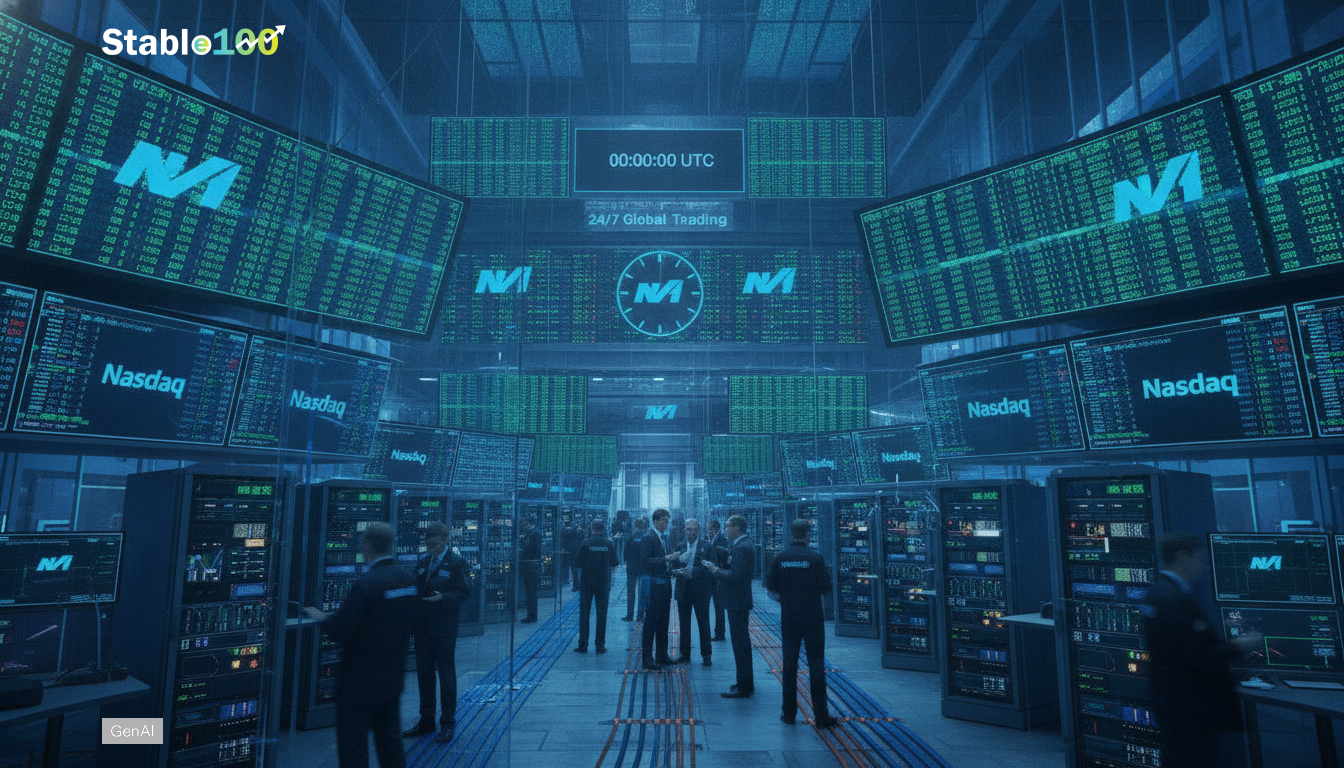
Any exchange-run tokenized securities venue must demonstrate how continuous trading would work under real-world U.S. market structure constraints. Extending trading hours can change staffing, risk controls, and margin operations because price discovery may occur when liquidity is thin and hedging is harder. Surveillance and circuit-breaker style halts would need to run continuously, and best-execution policies must remain enforceable across venues. Routing and quoting rules also matter; SEC Rule 611 shift could reshape tokenized US stocks outlines how changes to protected-quote logic could ripple into tokenized market design. For context on market sizing and adoption expectations, Tokenized Asset Market Surges Past $43 Billion frames how quickly tokenized rails have grown and why exchanges are treating them as competitive infrastructure. The NYSE tokenized securities platform debate is therefore tied to how these constraints translate into real-time operations.
Custody, Settlement, and Compliance Controls
A NYSE tokenized securities platform would likely rise or fall on custody segregation, settlement finality, and compliance monitoring that meets institutional standards. Tokenized securities can encode transfer restrictions, whitelist logic, and corporate actions instructions, but intermediaries still need disaster recovery plans, reconciliations, and audit-ready reporting across jurisdictions. Banking guidance is shaping how firms consider tokenized cash legs and stable settlement assets; FDIC GENIUS Act guidance reshapes digital deposits is closely watched for potential implications on reserve posture and supervisory expectations. In parallel, reserve management discussions connect to broader settlement plumbing, including State Street money market fund targets stablecoin reserves. A deeper primer on how reserve assets can affect stability appears in Money Market Fund Explainer: State Street Stablecoin Reserves, which helps explain why cash-equivalent design matters for tokenized settlement workflows, before controls are stress-tested in production.
Security, Smart Contract Risk, and Liquidity Fragmentation
Even with strong rules, an exchange-led tokenization effort faces technical and market risks that can derail adoption. Smart contract failures can create irreversible loss or governance disputes, and security engineers argue assurance cannot rely on periodic reviews alone, as highlighted in Crypto’s security nightmare won’t be solved by ordinary audits. Liquidity fragmentation is another constraint when the same exposure trades across multiple wrappers or venues, widening spreads and complicating hedges. Broker-dealers also need consistent, regulator-ready controls for recordkeeping and supervision, and GAO urges FDIC to strengthen crypto regulation rules illustrates how quickly compliance expectations can tighten. It is crucial to prioritize resilient controls under stress.
Outlook: Can Tokenized Securities Platforms Compete at Scale
The next phase for tokenized securities will be judged by consistent issuance pipelines, secondary liquidity, and reporting that institutions can audit without building parallel systems. A credible path is incremental integration where exchanges, custodians, and transfer agents align token representations with legal ownership, corporate governance, and standardized disclosures. If 24/7 markets expand, the benefit may be not only longer sessions but faster collateral movement and tighter post-trade cycles across time zones. Policymakers remain decisive because access rules and intermediary obligations determine what products can scale and who can distribute them. For investors, the success metric is simpler: tighter spreads, fewer settlement failures, and clear rights, regardless of whether the winning model resembles Nasdaq’s approach or a future NYSE tokenized securities platform.