Bank of Korea’s Endorsement of CBDC
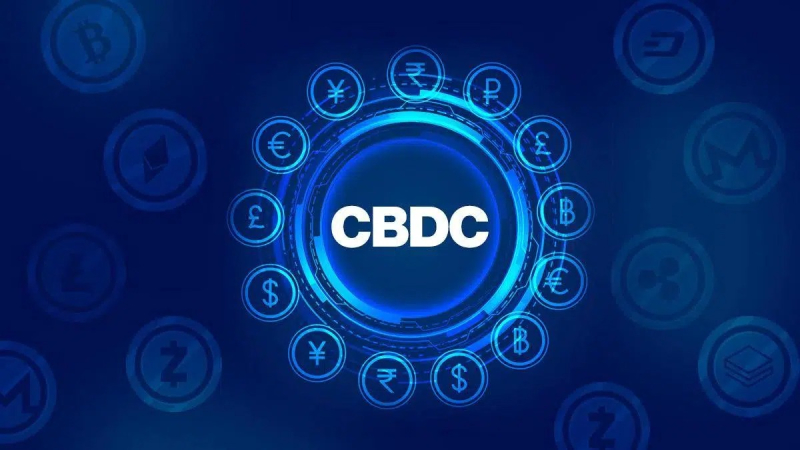
The Bank of Korea is tightening its message on how tokenized money should be issued and supervised as domestic rules near implementation. CHOSUNBIZ reported the central bank supports a wholesale style CBDC to settle tokenized assets and prefers bank issued instruments over privately minted coins. In the same Live policy discussion, officials positioned deposit tokens as the bridge between regulated bank liabilities and on chain settlement for capital markets use cases. Today, the emphasis is on keeping settlement finality inside the existing safety net, including supervision, liquidity access, and payment system continuity. The bank framed the stance as a way to support innovation while protecting monetary sovereignty.
Implications for Deposit Tokens
Bank executives and fintech firms are now recalibrating product roadmaps around what the central bank will recognize as settlement money. The Bank of Korea focus signals that deposit tokens would need bank grade governance, robust redemption, and clear legal claims that match conventional deposits, as CHOSUNBIZ summarized. A separate Update on domestic tokenization rules is also shaping timelines for pilots and licensing, and the context overlaps with South Korea July rules set stage for tokenized deals at https://usdmirror.com/south-korea-july-rules-set-stage-for-tokenized-deals/. Today, the practical implication is that tokenized securities and funds may be designed to settle through bank liabilities rather than through free floating crypto collateral. The bank is implicitly steering institutions toward interoperable rails that regulators can examine end to end.
Stablecoins Exclusion and Its Impact
The central bank stance draws a bright line between bank money and issuer money, and that line is likely to affect cross border payment experiments. CHOSUNBIZ reported the Bank of Korea rejects stablecoins as a settlement instrument for tokenization, underscoring concerns about runs, reserve quality, and policy transmission. Global regulatory debates are moving in parallel, as shown by CoinDesk coverage of U.S. CFTC oversight discussions, and the decision could push trading venues and wallet providers to prioritize bank integrated payment flows and custody disclosures. In a Live market environment, the decision could push trading venues and wallet providers to prioritize bank integrated payment flows and custody disclosures. The bank is also narrowing the competitive set for nonbank issuers seeking mainstream payment access under Korean supervision.
Technical and Economic Considerations
Engineering choices are now inseparable from balance sheet and settlement risk questions for banks that want tokenized cash. The Bank of Korea view implies that systems must preserve redemption at par, intraday liquidity, and resilient operations, while still allowing programmable settlement features. For banks weighing issuance, JPMorgan JLTXX filing signals tokenized cash push at https://stable100.com/jpmorgan-jltxx-filing-signals-tokenized-cash-push/ illustrates how tokenized cash products can be framed as regulated instruments rather than pseudo deposits. An Update from industry developers suggests atomic delivery versus payment and permissioned identity layers will be prioritized over open access designs. Live testing will likely focus on throughput, privacy, and recovery procedures instead of consumer wallet features. The goal is to prevent tokenized liabilities from fragmenting bank funding or weakening deposit confidence.
Global Perspective on Digital Currencies
South Korea is not alone in treating tokenization as a public infrastructure question rather than a purely private payments contest. CoinDesk reported Saudi Arabia is exploring economy wide tokenization initiatives, showing how states link digital assets to macro resilience and capital market development. In that global context, the Bank of Korea stance can be read as an attempt to align innovation with supervisory reach while avoiding parallel money. The New York Times has also tracked how governments view digital currency projects through lenses of sovereignty and systemic risk, even when consumer adoption remains uneven. Today, the combined message is that regulated rails, identity, and settlement finality matter more than branding. Live industry experimentation with non fungible tokens may continue, but the settlement asset is increasingly expected to be sovereign or bank issued.