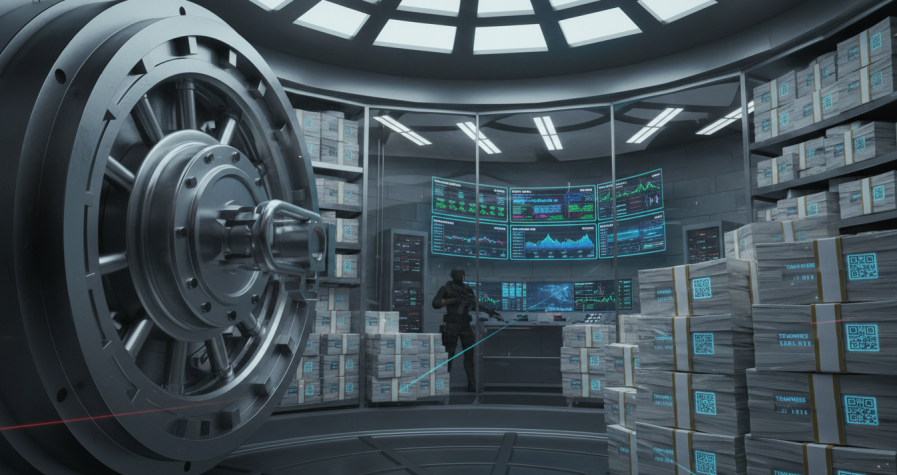
Introduction to Tokenized Money Market Funds
Markets are treating the move as a practical step, not a concept test, as large asset managers and banks push funds onto rails that settle faster. Today, trading desks are watching whether onchain issuance can reduce operational frictions that show up in collateral calls and intraday liquidity management, and whether tokenized money market funds can function as cash like instruments with programmable transfer rules and clearer ownership records. Live distribution is the key shift, because investors and intermediaries can reconcile positions without waiting for end of day files. The latest Update from executives involved frames the effort as an institutional product, not a retail experiment.
Details of the BlackRock and JP Morgan Collaboration
The collaboration brings BlackRock and JP Morgan into the same build, with the bank focused on plumbing and the asset manager focused on portfolio product and governance. Today, the clearest signal is that the initial audience is institutional treasurers who already use money market funds, but want tighter linkage to digital settlement workflows, and CoinDesk described the broader industry push in its analysis of tokenization efforts, published May 14, 2026, at CoinDesk on Wall Street tokenization. Live pilots typically start with limited counterparties to control legal and operational risk. One related Update worth tracking is how regulated stablecoin rails are shaping demand, covered in Senate panel advances CLARITY Act for crypto rules. The near term objective is tighter settlement certainty for cash management workflows.
Implications for Stablecoin Issuers
For stablecoin issuers, the immediate question is whether tokenized fund shares can become a standard reserve sleeve that is easier to audit and easier to pledge. The design is aimed at letting reserve managers treat fund exposure as high quality collateral while keeping the operational record closer to the asset itself, and the policy backdrop is shifting as lawmakers debate stablecoin frameworks, with an Update on those discussions summarized in Stablecoins, GENIUS Act, and New Rules Ahead. When tokenized money market funds are integrated into reserve dashboards, the issuer can shorten reconciliation loops and reduce manual breaks between custodians, administrators, and trading venues. Live monitoring matters here, because reserve composition is under continuous scrutiny from counterparties and regulators. The practical benefit is improved controllability of reserve movements.
The Future of Financial Infrastructure
The longer arc is about financial infrastructure that can treat cash, collateral, and settlement as one continuous process rather than disconnected systems. Banks have spent decades building messaging and reconciliation layers, but tokenization is forcing a closer link between asset representation and transfer finality, and CoinDesk also highlighted how market structure changes are being debated alongside legislation in its May 14, 2026 policy coverage at CoinDesk on the CLARITY Act committee vote. Today, that shows up in experiments that combine fund shares with bank run settlement, so a treasurer can move collateral without relying on manual instructions. Live settlement is not the only goal, because governance, permissions, and compliance controls must be embedded. A key Update for infrastructure teams is whether standards emerge for interoperability across venues.
Potential Challenges and Considerations
Execution risks remain, especially around legal finality, transfer restrictions, and operational controls that satisfy both fund regulations and bank compliance. If tokenized representations are used for collateral, documentation must specify what happens in insolvency scenarios and how redemptions are handled under stress. Today, compliance teams will focus on identity, sanctions screening, and record retention, because the workflows are new even when the underlying assets are familiar, including bank KYC/AML programs and fund administrator recordkeeping requirements. Live environments also raise uptime expectations, since tokenized instruments invite around the clock interaction even if the fund itself keeps traditional dealing windows. Another Update item is how auditors and administrators validate onchain records alongside conventional books and records. Market participants will judge success by whether the system reduces failed settlements and manual breaks without introducing new forms of operational fragility.