CFTC and SEC Signal Crypto Regulation Coordination
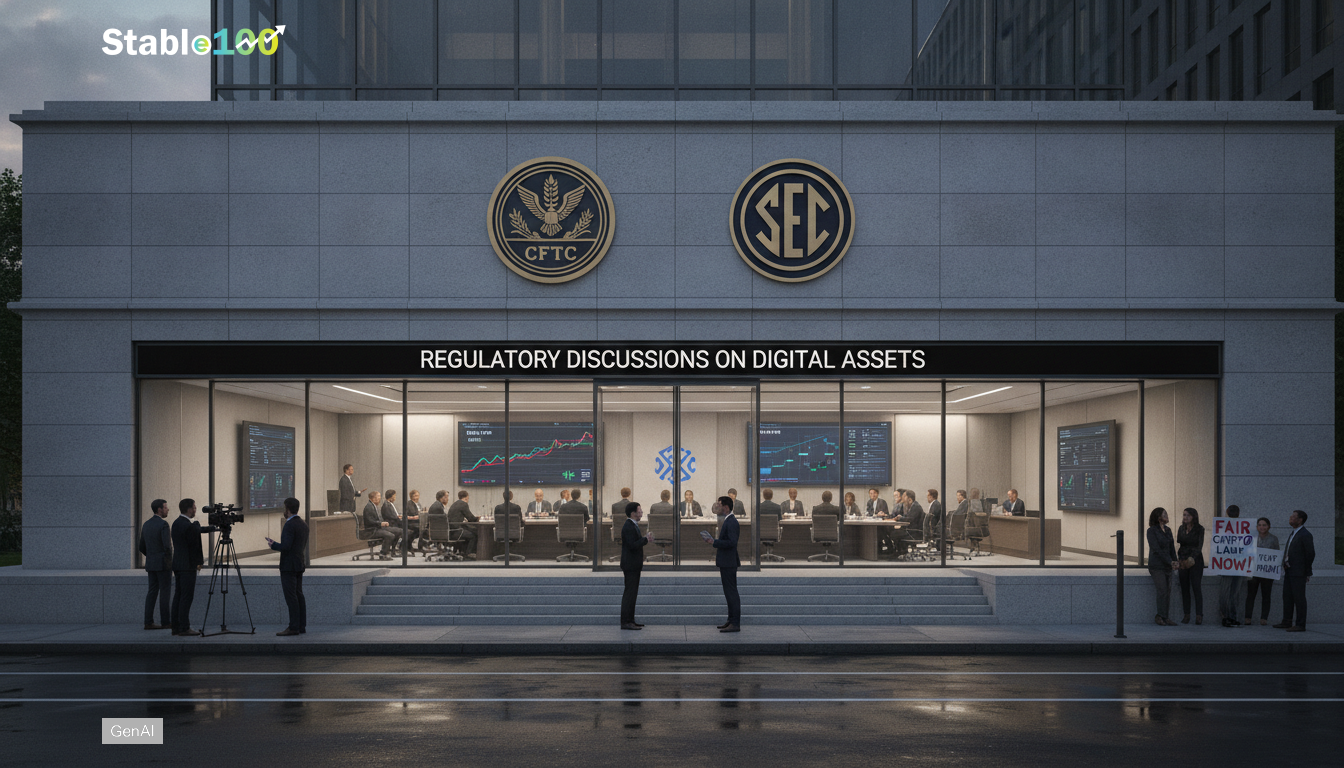
U.S. crypto regulation is taking shape as regulators coordinate more tightly while Congress remains deadlocked on the CLARITY bill. According to available reports, the Commodity Futures Trading Commission has indicated it will work alongside the Securities and Exchange Commission on joint approaches that could be implemented under existing authority, though the exact timeline and scope may vary, as described in SEC weighs crypto regulations as CLARITY Act stalls. SEC Chair Gary Gensler has said publicly that many tokens may resemble securities and should comply with securities laws, a view reflected in the agency’s enforcement posture. For exchanges, brokers, and issuers, the immediate need is consistency on definitions, surveillance expectations, and workable registration pathways. Industry counsel is watching for clearer lines on custody, disclosures, and market conduct.
Crypto Regulation Gaps: Classification, Jurisdiction, and Spot Markets
Near-term coordination still runs into basic classification and jurisdiction issues that markets have not fully resolved. As indicated by available reports, the SEC has tied many actions to the Howey test and the Securities Act framework, while the CFTC has long overseen derivatives tied to commodities, including bitcoin futures. In the middle of that overlap, crypto regulation debates often focus on whether spot markets should face commodity-style rules, securities-style rules, or a hybrid. Market structure questions are also amplified by scale. For context on stablecoin flows and network reliance, Tron USDT supply hits $87.9B as Q2 transfers reach $2.1T summarizes transfer volume and liquidity concentration. Those figures underscore why regulators and market participants continue to prioritize surveillance and disclosures.
What Platforms Must Prepare for Under Crypto Regulation
For trading venues and intermediaries, the compliance burden is increasingly operational rather than theoretical. Platforms are watching for guidance on custody standards, segregation of customer assets, and how disclosures should treat staking, lending, and token issuer relationships. These requirements affect listing committees, risk limits, and ongoing monitoring. They also influence whether firms register, geo-fence certain products, or restructure entities to separate spot activity from derivatives. A cross-portal read on demand and liquidity trends, USDT Supply Shrinks as Crypto Demand Cools, adds market color that can shape supervisory priorities. Across these decisions, expectations around U.S. crypto regulation continue to harden around documentation and controls.
AI, Surveillance, and Model Risk in Market Oversight
As regulators focus on market integrity, AI use inside trading and compliance functions is also moving into view. The SEC has referenced predictive data analytics and potential conflicts in its public rulemaking materials, and the CFTC has discussed algorithmic and high-frequency practices in market-oversight contexts. Platforms are reportedly increasingly using machine learning to monitor manipulation patterns, screen sanctions exposure, and tune liquidation engines, which can create audit and explainability demands. This is not only a technology issue; it becomes a governance issue when automated systems influence customer outcomes. Firms adapting to evolving crypto regulation expectations may need model inventories, testing evidence, incident response plans, and retention of decision logs. Those controls can also help address regulatory questions tied to supervision and controls.
Next Steps Toward a More Complete U.S. Framework
The most immediate path appears to be incremental alignment rather than a single sweeping statute, especially if legislation remains stalled. Agencies can clarify how existing registration, disclosure, and surveillance tools apply to specific product types, and they can coordinate examination priorities where firms touch both securities and derivatives. In public statements and releases, the SEC has emphasized compliance with established investor protection rules, while the CFTC has emphasized market integrity and anti-fraud enforcement in commodity-linked products. International developments add urgency because cross-border platforms can arbitrage gaps quickly, and supervisors share concerns through IOSCO workstreams and bilateral dialogues. Looking forward, crypto regulation will likely hinge on clearer taxonomies for token types, stablecoin reserve practices, and custody standards so firms can build durable compliance programs without constant redesign. Clearer guidance could also reduce incentives to rely on enforcement as de facto rulemaking.