Deutsche Bank’s Key Findings
Deutsche Bank is framing a clearer money map as banks, fintechs, and regulators converge on token-based rails. In commentary circulated to clients, the bank describes three parallel tracks that are now being tested in production settings: stablecoins, tokenized bank money, and central bank digital currency. A Live read on markets and settlement shows why timing matters, with price volatility on public chains clashing with payment certainty in commerce. The bank places digital finance in the center of this shift, because policy, collateral, and programmability now interact at transaction speed. Today, treasury teams are reacting to intraday liquidity constraints rather than monthly funding cycles. The next phase hinges on governance and interoperability.
The Role of Stablecoins
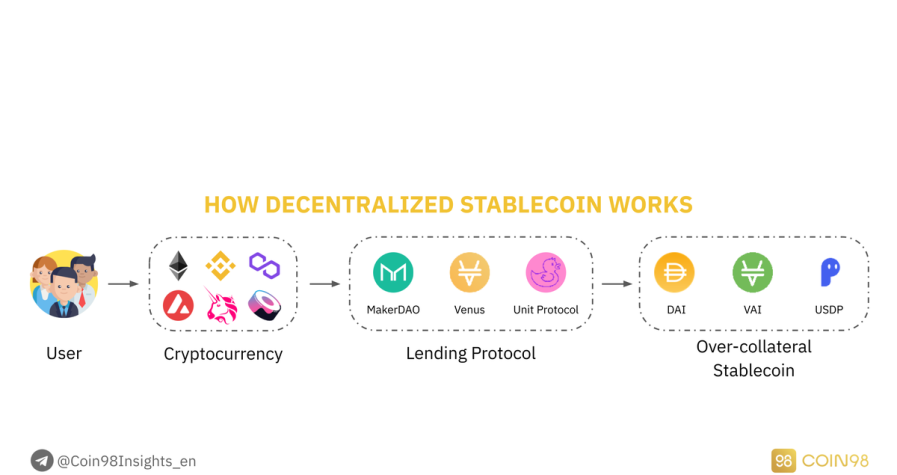
Stablecoins are being treated less as a niche crypto tool and more as a settlement instrument that can plug into existing workflows. An Update from policy desks shows regulators focusing on reserve quality, redemption mechanics, and issuer disclosures, areas that shape whether stablecoins can scale safely. In a related angle on market stress, Stablecoins as DeFi Safe Havens Under Market Stress captures how demand can spike when traders seek predictable units of account. For a Live benchmark on risk appetite, CoinDesk tracked price moves in Live markets coverage on Bitcoin slipping below $77,000. Today, Deutsche Bank’s framing implies that supervision, not branding, will decide which coins become payment-grade.
Understanding Tokenized Deposits
Tokenized deposits are gaining attention because they preserve the legal claim structure of bank deposits while adding programmable transfer features. Deutsche Bank’s study treats tokenized deposits as a bridge between traditional accounts and on-chain settlement, particularly for regulated institutions that need finality and clear balance-sheet treatment. In digital finance operations, that distinction affects capital planning, liquidity buffers, and intraday credit lines. Today, banks are testing how tokenized deposits can support delivery versus payment and automated compliance checks without exposing customers to issuer risk outside the banking perimeter. A Live compliance issue is how identity, sanctions screening, and reversibility are implemented at the token layer. For context on competing models, Stablecoins vs Tokenized Deposits: Banking Debate outlines why banks prefer deposit-based tokens for regulated settlement.
CBDCs and Their Impact
CBDCs remain the most policy-driven track, and Deutsche Bank’s study links their design choices to real-world adoption constraints. An Update from central banks often centers on privacy boundaries, offline use, and how intermediaries distribute wallets, each choice shaping whether a CBDC competes with or complements commercial bank money. Today, policymakers are also watching how wholesale CBDC experiments could reduce settlement risk in capital markets while changing the role of correspondent banking. A Live operational concern is whether CBDC rails can match the uptime, throughput, and dispute resolution expectations of retail payments. Deutsche Bank’s analysis suggests that a CBDC’s impact will depend on limits, remuneration, and integration with existing payment systems, not just the technology stack.
Future Implications for Digital Finance
The near-term consequence of Deutsche Bank’s framework is that institutions will likely run multiple forms of digitized money in parallel, then route transactions based on risk, cost, and compliance. That routing logic is becoming a competitive layer of digital finance, where treasurers want predictable settlement windows and regulators want auditable controls. Today, firms are building playbooks for when to use stablecoins for cross-border speed, tokenized deposits for bank-grade settlement, and CBDCs for regulated rails in specific corridors. A Live measurement that matters is whether these instruments reduce failed payments and operational friction without creating new liquidity traps. The clearest Update signal is that interoperability standards and supervisory clarity will determine scale, because fragmented rails would raise costs instead of lowering them.