Moscow Exchange December Launch Under New Rules
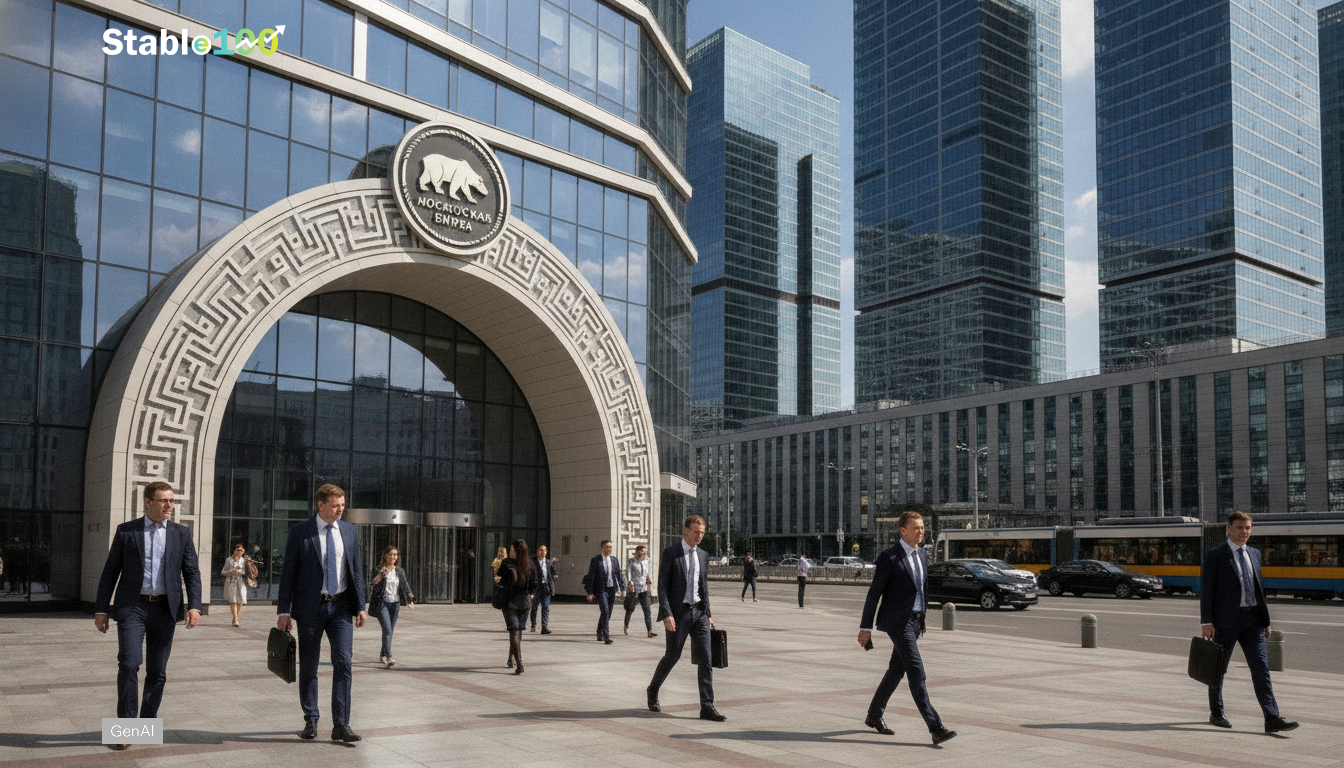
New Russian digital-asset rules are reshaping how domestic investors may gain regulated exposure to Bitcoin, Ether, and USDT through Moscow Exchange products. As indicated by available reports, the exchange plans to start the new instruments in December, positioning them as supervised market products rather than direct token trading. The structure is intended to mirror established securities workflows, including broker access and oversight, instead of open retail circulation. Market participants are watching the timeline because a Moscow Exchange listing may become a template for brokers and other venues.
What the Framework Allows and Restricts
The legal basis focuses on defining compliant issuance and trading formats for digital asset exposure, while maintaining restrictions on using tokens for everyday payments. For stablecoin context in another market setting, see Tether reserves climb as excess buffers near $8B. The most important operational questions include which crypto-linked products qualify as financial instruments and what disclosure, reporting, and suitability requirements apply. Officials have emphasized keeping custody controls and audit trails within familiar supervisory channels as these products expand.
Investor Access Rules and Suitability Checks
Eligibility is expected to remain a central guardrail, especially for non-qualified investors seeking exposure through exchange-traded products. Available reports have noted that investor protection has been a recurring theme, with suitability checks intended to limit extreme-volatility risks for retail accounts. Russia crypto law may keep formal onboarding and suitability reviews in place as volumes grow. In practice, access may broaden via brokers while position sizing, product types, or account qualification still constrain participation. The regulatory balancing act resembles debates elsewhere, including the CoinDesk report on derivatives oversight in CFTC gets into legal clash over stock perps after having cleared path for crypto version.
How Moscow Exchange Compares with Other Regulated Markets
Unlike jurisdictions that prioritize spot ETF-style listings or wide retail exchange access, Moscow Exchange is moving under a model centered on controlled distribution and supervised intermediaries. Comparable approaches can be seen in Hong Kong stablecoin trials for tokenized debt settlement, where regulated settlement experiments are used to validate controls before broader adoption. That structure resembles pilot programs that ring-fence functionality while regulators test compliance operations at scale, including broker-led access rather than open exchange accounts. The Russian approach also diverges from markets that integrate stablecoins into payments, since domestic policy signals continued limits beyond regulated investment products.
Outlook for USDT, BTC, ETH Products
If the December rollout proceeds as indicated by reports, near-term focus will be on liquidity formation, risk disclosures, and broker readiness to explain crypto-linked product mechanics. For additional stablecoin market context, USDC euro stablecoin trading tops USDT in Europe outlines how trading patterns can shift under different regulatory and market structures. The longer-term measure will be whether these instruments attract consistent institutional participation without prompting supervisors to loosen retail access too quickly. Compliance demands are expected to remain high, including reporting standards and trade monitoring similar to traditional securities markets. Russia crypto law will continue to define how far product breadth and investor reach can expand.