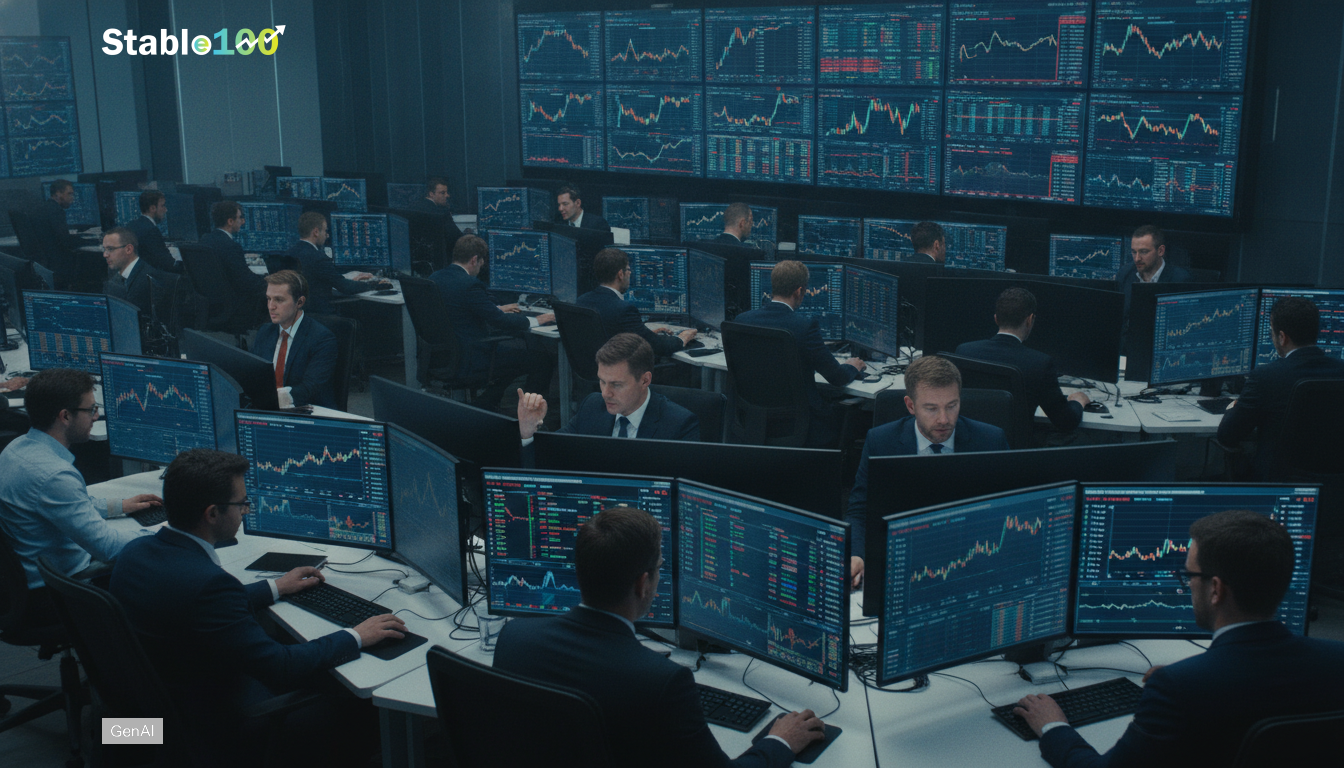
RWA perpetual futures surge across major perp venues
Real world asset linked perpetuals are moving from a niche product into a screen some traders check alongside majors. Based on each venue’s own displayed market data, RWA perpetual futures have climbed in visibility on Hyperliquid and Binance. Observers point to more frequent large trades and steadier turnover during US hours as shown on those venue dashboards, though the exact magnitude varies by market and time window. Market participants say the pickup is linked to improving execution conditions such as narrower spreads and deeper order books for equity and commodity-style exposure without leaving crypto margin systems. With more consistent two way flow, these contracts can look less like a one off narrative trade and more like a repeatable pocket of liquidity. The immediate impact is a broader set of hedging and leverage routes that sit next to BTC and ETH perps.
Bitcoin volume comparison: how close are RWA perps getting?
The key benchmark many desks use is Bitcoin perp turnover on the same platforms. During peak sessions, some markets may be closer to BTC perps at times, according to the volume metrics displayed on Hyperliquid and Binance; however, “near Bitcoin volume” depends on the specific contract, the venue’s measurement method, and the time interval viewed. That relative convergence, as indicated by venue-reported volume figures, has drawn attention from traders who typically use BTC liquidity as the baseline for sizing and slippage assumptions. CoinDesk’s opinion framing argues that perp activity can outrun slower tokenization adoption cycles as traders prioritize leverage and continuous pricing, see RWA perps will outpace tokenization. For broader context on tokenized fund plumbing and oversight, see Central Bank of Ireland Clears Aviva Tokenized Fund. Many desks now treat RWA perpetual futures as a separate line item when they review venue-reported turnover.
Tokenized equities and stablecoin rails driving usage
A practical driver is tokenized equities being used as synthetic beta rather than long term holdings, which can also translate into demand for RWA perpetual futures as a trading wrapper. Traders can express equity style views while keeping collateral and risk systems inside crypto venues, which can pull flow away from smaller altcoin perps. Stablecoin settlement matters here because margin, funding, and rapid venue to venue rebalancing often run through dollar tokens, according to common venue mechanics and trader practice. For related distribution and product context on tokenized stock exposure, see US Stock Market Outlook: Tether USAT on Celo Impact. Separately, shifts in regional risk appetite can amplify cross market perp activity, as described in South Korean crypto trading rises as stocks sell off. On Hyperliquid and Binance, this has been most visible during US trading hours when liquidity screens are most active.
Market structure impact: funding, basis, and cross-margin
As liquidity improves, market structure effects can show up in funding and basis behavior, though outcomes differ by contract and regime. When RWA perp order books stay active for longer windows, their funding rates may start to matter more for cross margin strategies that previously centered on BTC and ETH, according to how multi-asset margining and funding arbitrage are typically managed on perp venues. A tighter, more continuous market can also raise the ceiling for larger hedges tied to equities, rates, or commodities catalysts, but that capacity is ultimately constrained by the venue-level depth and liquidation dynamics. CoinDesk’s market coverage on positioning and liquidity constraints highlights how follow through can still be limited even in strong narratives, see Crypto faces 3 barriers to next bull run, STS Digital CEO says. In stress scenarios, the resilience of tokenized collateral matters too, as discussed in DeFi stress test: tokenized gold holds up in DeFi. In practice, most monitoring happens alongside the same venue funding panels used for BTC and ETH perps.
Outlook for RWA perps: liquidity durability and regulation
The near term question is whether current turnover holds once volatility compresses and funding normalizes. Venue dashboards show that activity has repeated across multiple sessions rather than appearing only as isolated spikes, but those signals should be interpreted as venue-reported indicators rather than standardized marketwide totals. Some desks say they are tracking RWA perpetual futures as a distinct sleeve next to majors and memecoins, especially when activity concentrates during US trading hours. Regulation and compliance posture will also shape which venues scale fastest as scrutiny rises around crypto linked financial products. For example, policy changes affecting stablecoin issuers can change margin availability and settlement confidence, as noted in Circle secures New York trust charter as crypto regulatory push accelerates. If rails and oversight remain stable, this segment could keep competing for marginal perp volume.