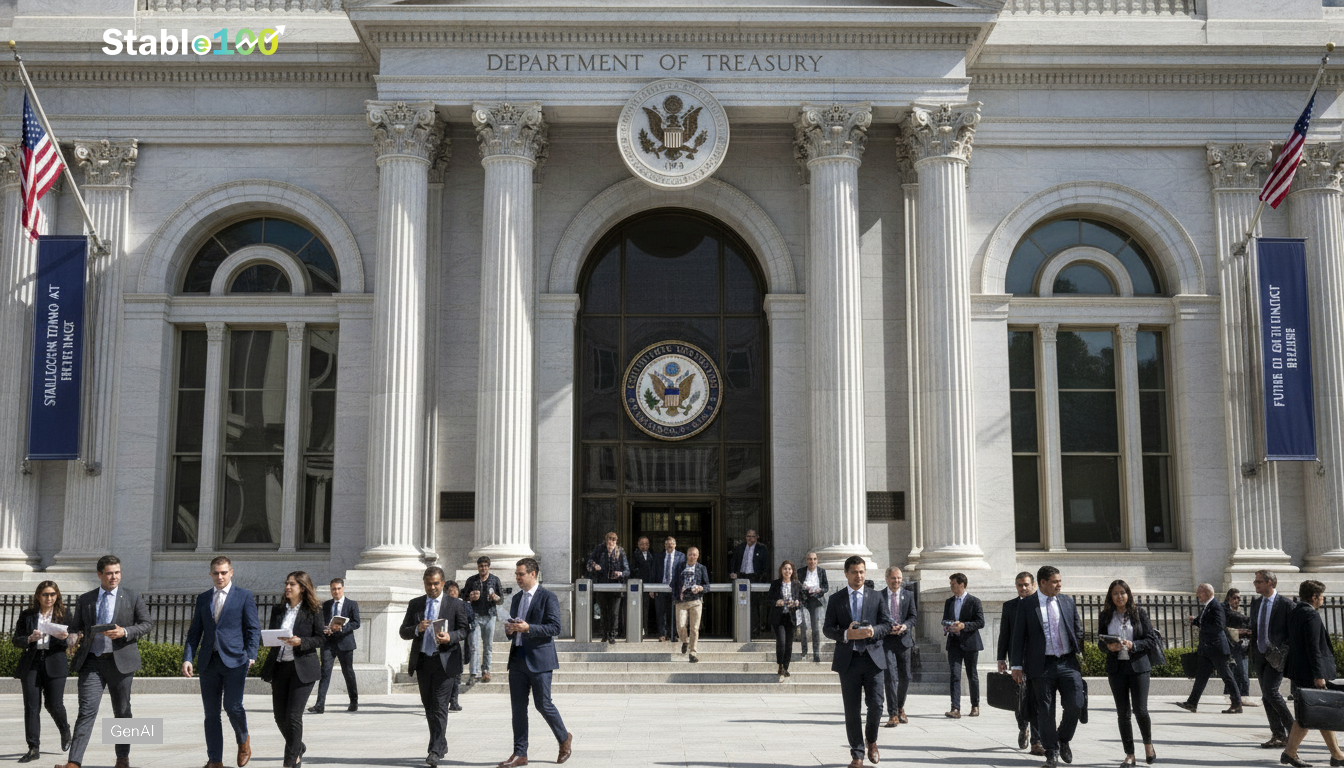
Stablecoin regulation: US Treasury advances GENIUS Act rules
Stablecoin regulation moved closer to implementation as the US Treasury advanced a GENIUS Act rulemaking package, reportedly following a July deadline that tightened the timeline. The rules frame stablecoin regulation and oversight of dollar-pegged tokens as a payments and consumer protection matter, with practical requirements for reserves, disclosures, and issuer governance. Treasury officials have indicated they plan to coordinate with other regulators and use existing authorities to outline compliance pathways for firms already issuing dollar-pegged tokens. Policy coverage has described the action as a formal proposal tied to the GENIUS Act framework; if adopted as described, enforcement pressure could rise for issuers that do not align with the new standards.
What the GENIUS Act stablecoin rules require
The GENIUS Act framework emphasizes minimum reserve quality, routine attestations, and clearer redemption rights, with Treasury setting operational detail in the rules. CoinDesk detailed the Treasury proposal in U.S. Treasury Department proposes GENIUS Act stablecoin rule. A central feature is how the stablecoin rules describe acceptable liquid assets and the frequency of public reporting, which may become a meaningful compliance burden depending on final definitions. For comparison on cross-border tightening, see Binance restrictions tighten for HTX under EU rules. Regulators also want consistent terminology across issuers so disclosures are comparable and not marketing driven.
Implications of tighter governance expectations
Issuers face tighter expectations on governance, conflicts management, and how they document reserve custody, which could alter business models built on opaque structures. Potentially, large issuers may absorb the compliance cost, while smaller firms could seek consolidation or exit. According to available reports, the operational impact could include more frequent reporting cycles and a need to demonstrate redemption capacity under stress. The GENIUS Act approach also increases the importance of third-party controls, as reserve attestations and custody arrangements become audit-sensitive risk points. In the US, firms working with banks may find that partnership due diligence expands, particularly around BSA and sanctions compliance.
Market and infrastructure reactions to the new rules
Trading venues and payment integrators are likely to re-evaluate which tokens they list or support once the final compliance contours are clear. That may not require a change in consumer demand, but it can change liquidity if platforms apply stricter listing standards. The Treasury proposal may also affect yield-bearing structures, since regulators can treat certain incentives as increasing run risk, as noted in policy coverage of similar structures. Market infrastructure providers are positioning for this shift, as discussed in Stablecoin Networks Push Banks to Tokenize Deposits and Tokenized deposits: Banks race to build faster rails. Issuers will likely compete on transparency metrics such as reserve reporting cadence and redemption processing times.
What comes next for US stablecoin policy
Congressional interest in refining crypto statutes is likely to continue because Treasury implementation could expose gaps that only legislation can resolve. The GENIUS Act may become a baseline for lawmakers to revise as they see how issuers respond and where consumers experience friction. Treasury is expected to use comment feedback to clarify definitions that matter for supervision, such as what constitutes a redemption delay versus a routine processing window, as described in coverage of the proposal. Stablecoin regulation could also become intertwined with broader payments modernization debates, including how tokenized deposits are treated relative to nonbank stablecoins. For the market, the key outcome is whether federal rules deliver predictable standards that reduce regulatory fragmentation.