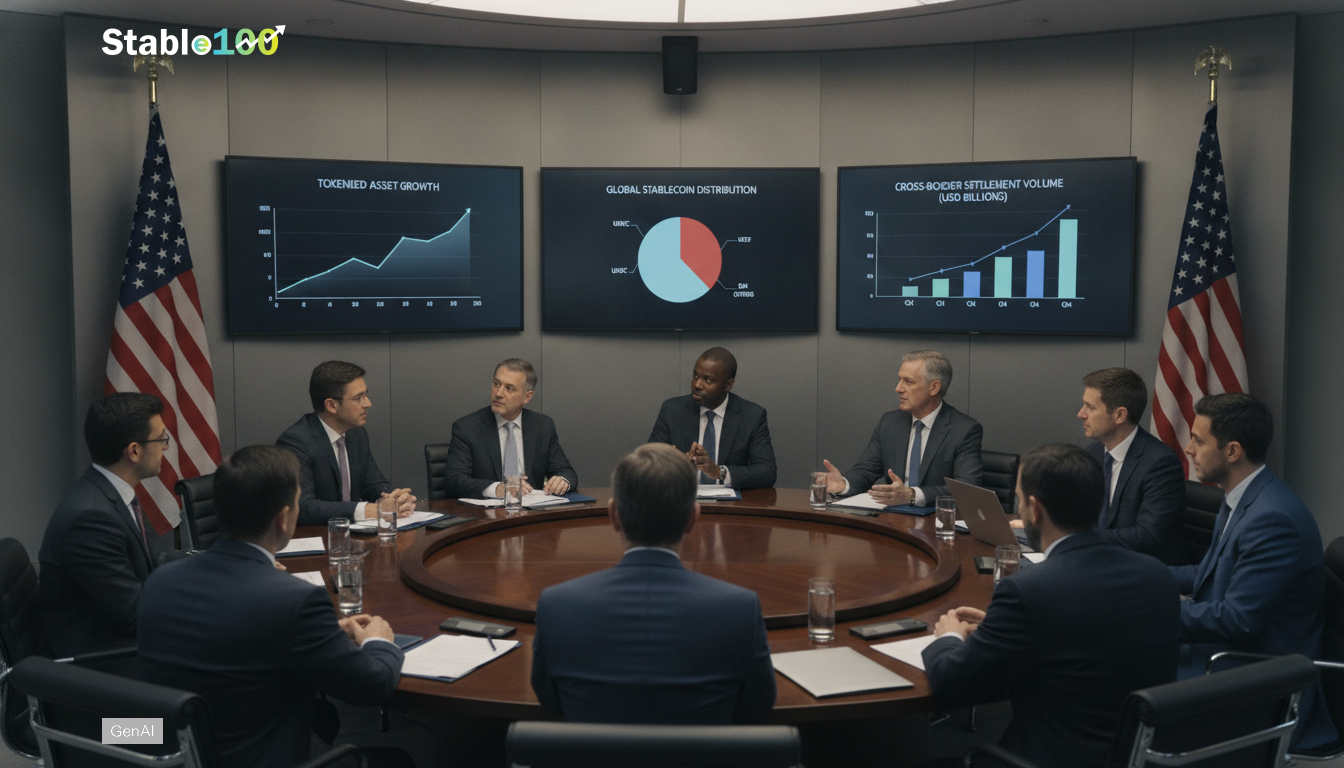
UK-US Taskforce coordination moves from talks to pilots
The UK-US Taskforce is presented by participants as moving the transatlantic agenda from principles to implementation through a joint workstream between regulators and finance ministries. In early sessions, the UK-US Taskforce was described by officials and industry attendees as a coordination channel for supervision, market structure, and enforcement handoffs. UK Treasury messaging has emphasized reducing friction for cross border issuance while keeping conduct standards consistent with Financial Conduct Authority expectations, according to public statements and briefings summarized by market participants. On the US side, Treasury and market regulators have indicated in broad terms that interoperability and disclosure matter for institutional participation, though specific priorities vary by agency. Firms seeking to pilot new products say they want predictable guardrails and clear responsibility splits, and participants have pointed to 2026 as a working horizon for early limited pilots. The near term aim is described as synchronizing timelines and decision points across both jurisdictions, rather than launching a single unified rulebook.
Tokenized assets priorities and market signals
The current push is reportedly framed as bringing tokenized assets into more familiar issuance and settlement workflows while keeping the legal wrapper recognizable to institutions. In briefings shared with market participants, the UK-US Taskforce has reportedly highlighted tokenization as a practical route to faster collateral movement and more transparent ownership records, though detailed metrics and implementation dates have not been formally published in this draft. A related policy thread is summarized in Stablecoin regulation: US and UK align rules and it shows how coordination is being packaged for stakeholders. Industry momentum has also been shaped by BlackRock tokenized assets experiments, as reported in mainstream financial coverage, drawing attention to onchain fund shares and programmable compliance. For closely watched coverage on market structure debates, the secondary keyword new york times continues to be cited by some policy staff as a reference point for public scrutiny.
Stablecoins as settlement rails under common standards
Stablecoins are increasingly discussed by regulators and market participants as potential settlement tools that could make tokenized instruments usable at scale, especially when cash legs need to clear outside banking hours. The policy mapping work has been outlined in US and UK Treasuries Map Rules for Tokenized Assets as agencies try to align definitions, reporting, and cross border supervision. Supervisors are focusing on reserve quality, redemption mechanics, and operational resilience, consistent with guidance discussed by the Financial Stability Board in its global stablecoin work. The digital finance angle is that payment rails and capital markets plumbing are converging, so stablecoin policy is often discussed alongside securities policy rather than as a standalone topic. Private sector platforms are preparing to comply with these expectations, with some industry timelines pointing to 2026, though pilot dates and scope may shift depending on approvals and supervisory capacity.
UK-US Taskforce deliverables for disclosures and custody
Regulators are signaling interest in measurable outputs that can be tested in limited pilots, rather than relying only on broad legislative rewrites. One potential deliverable discussed by participants is a shared template for disclosures and risk statements that can travel with tokenized assets between venues, which could reduce duplicative reviews if adopted. Another area under discussion is an approach to custody and recordkeeping so that beneficial ownership and transfer finality can be audited under both legal systems, though the final design would depend on each jurisdiction’s existing custody and securities frameworks. Market participants also want clearer treatment of stablecoin settlement and how it interacts with broker dealer, exchange, and payment rules, and the UK-US Taskforce is cited as the forum where these handoffs are being pressure-tested. Competitive pressure is rising as major payments firms invest, and CoinDesk described that dynamic in Visa backs Open USD with new stablecoin platform. Those moves are frequently cited by industry as a reason to avoid prolonged uncertainty.
What aligned rules could change next
If the coordination effort holds, market participants argue that cross border issuance could be designed once and distributed in both markets with fewer bespoke technical and legal variations. The UK-US Taskforce is also described by supporters as a potential way to reduce the risk of regulatory arbitrage by aligning core definitions for tokenized assets, stablecoin settlement, and the responsibilities of intermediaries, though formal alignment would still depend on each regulator’s rulemaking process. That matters for asset managers and banks that need to demonstrate control environments to auditors and supervisors. Over time, clearer rules could shift activity toward regulated venues and away from fragmented private arrangements that are harder to monitor. Agencies still need to decide how fast to approve production scale use cases, but the direction is generally portrayed as aiming for more consistent supervision rather than competing frameworks, with 2026 often referenced by industry as an initial checkpoint for pilots.