Grove’s Initiative for Asset Tokenization
Grove moved into the real assets race with the launch of Basin, positioning the venue as an execution and financing layer for onchain credit and collateral. Company statements describing Basin frame it as a product built to route capital between issuers, market makers, and buyers under tighter risk controls than ad hoc OTC. In that context, tokenized real-world assets sit at the center of the design, with interoperability and faster settlement used as the pitch rather than long term experiments. Today, desks are treating the rollout as a practical liquidity test, and Live monitoring is focusing on spreads, redemption behavior, and settlement timing. The first Update from Grove emphasized reliability over hype.
Impact on Daily Liquidity and Real Assets
Grove said Basin is designed for up to $1 billion in daily liquidity, a figure the company highlighted in its launch messaging and that traders will judge against actual throughput and depth. In a market where funding gaps can widen quickly, the promise of daily liquidity hinges on repeatable price formation and consistent counterparties rather than a single headline number. For policy context, CoinDesk covered related momentum in U.S. market structure debates in Clarity Act clears U.S. Senate committee, which traders cited Today as relevant to onboarding institutions. Live reaction has also tracked whether Basin can standardize collateral practices across venues, especially as tokenized real-world assets become more widely used in treasury style strategies. Each Update now centers on measurable liquidity, not projections.
Tokenization: Bridging Digital and Real Worlds
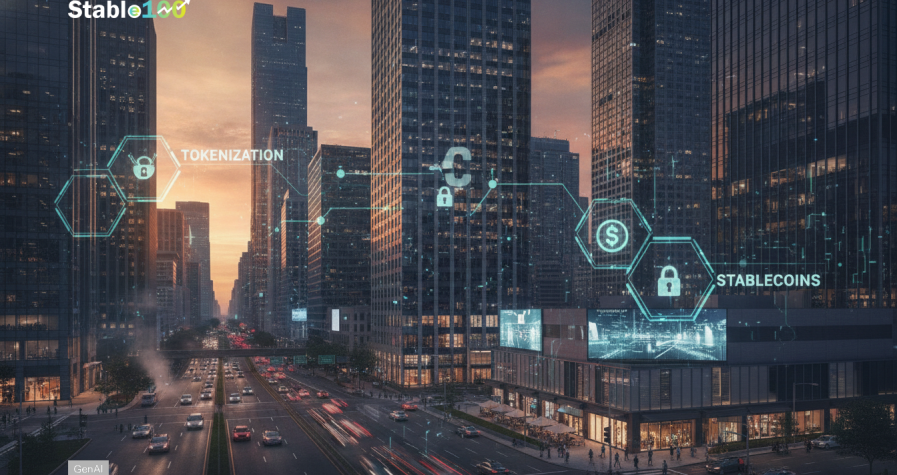
Basin is arriving as banks and exchanges push harder to link traditional instruments to onchain settlement, with asset tokenization becoming less about pilots and more about operating processes. CoinDesk described the broader institutional push in why Wall Street is racing to tokenize the stock market, a shift that frames Grove Basin as part of an ecosystem move, not a standalone product cycle. The immediate bridge problem is ensuring that token claims, custody, and servicing match real world legal rights, because tokenized real-world assets only scale when offchain enforcement is credible. Live coverage is now watching how Basin communicates these linkages to participants across jurisdictions. Today, the most important Update is whether standardized disclosures reduce friction.
Challenges and Opportunities for Investors
For investors, the draw is simpler access to yield bearing exposure and faster rebalancing, but the risks concentrate around counterparty selection, governance, and legal enforceability. Traders using Grove Basin will scrutinize how onboarding requirements filter issuers, and whether secondary transfers preserve compliance obligations, since operational shortcuts often show up during stress. A separate concern is policy alignment, and readers tracking regulatory drift can compare approaches via Senate panel advances CLARITY Act for crypto rules, which has shaped Today conversations about what institutions will tolerate. Tokenized real-world assets can also introduce new basis risks when onchain prices move faster than offchain settlement or valuation cycles. Live desks expect the next Update to focus on risk limits and transparency.
The Future of Real-World Asset Tokenization
Near term success for Basin will be judged by repeated settlement under load, not by launch day announcements, with volume, failure rates, and redemption timing serving as the core scorecard. Market participants also want evidence that the venue can integrate with existing stablecoin rails and treasury operations, because the path to scale usually runs through cash management workflows. That integration is why industry watchers are tying the story to broader liquidity plumbing, including analysis on Stablecoins and Digital Assets Outlook for 2026, which discusses how institutional usage can change market microstructure. If Basin demonstrates resilient operations, tokenized real-world assets may become a routine balance sheet tool rather than a niche allocation. Today, Live metrics will dictate the next Update cycle.