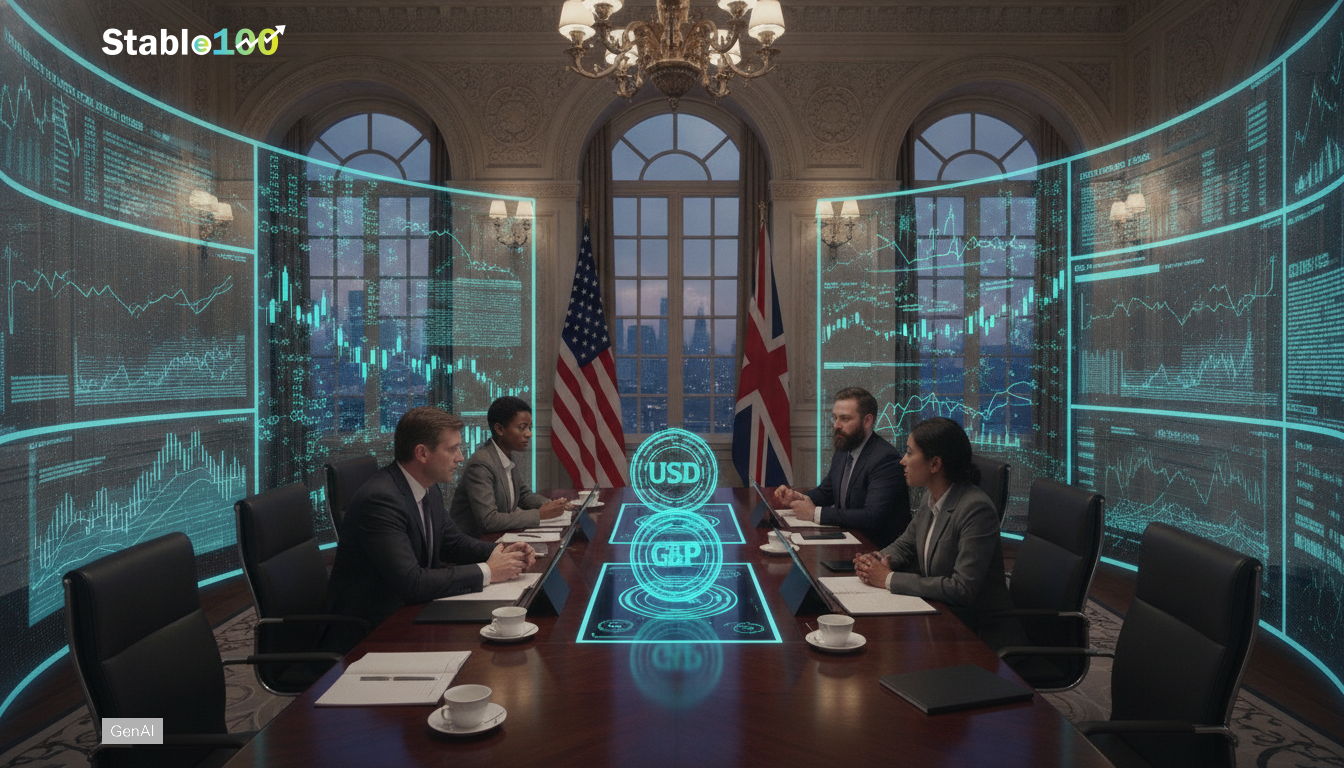
What US-UK collaboration means for tokenized assets
US-UK collaboration is moving from broad dialogue to a more practical workstream aimed at making tokenized instruments and stablecoins easier to use across jurisdictions. Public remarks from regulators and finance officials in Washington and London have suggested an interest in closer alignment on areas such as custody expectations, settlement finality, and reserve disclosures, though the scope and timing remain subject to ongoing policy work, and US-UK collaboration is increasingly framed as a way to reduce duplicated requirements. That matters because market participants often build separate compliance stacks for each venue, which can slow launches and limit liquidity. The Bank of England and the US Treasury have both emphasized financial stability priorities in public communications, and those priorities are likely to shape what can move cross-border with less friction. For issuers, a near-term objective is clearer guidance on structures, disclosures, and controls.
Building interoperable market plumbing
For issuers and market infrastructure providers, the immediate direction appears to be toward interoperable rails rather than isolated pilots, based on how officials and industry groups frame modernization efforts. According to available reports, a visible marker of momentum was noted on 2026/07/15 with reports of DTCC moving tokenized securities into live trading, which may prompt more concrete decisions on controls and post-trade processes in the US market: DTCC moves tokenized securities into live trading. That development intersects with UK priorities on wholesale market modernization and could accelerate adoption in cases where settlement certainty and legal enforceability are required, though the market impact will depend on regulatory follow-through and participant uptake. For a cross-portal view of related experiments, Tokenized Treasury Bonds: South Korea CBDC Test Plan describes how government-backed instruments are often used to test operational standards.
Stablecoin rules and cross-border supervision
A central theme in the policy discussion is preventing stablecoin growth from outpacing supervisory clarity. Cross-border finance initiatives are increasingly focused on definitions for reserves, expectations for redemption mechanics, and segregation of client assets, as reflected in recurring topics in public consultations and industry feedback. The stated policy aim is often to reduce duplicative approvals while keeping innovation inside regulated rails, especially where stablecoins touch payments and securities settlement. Firms are also watching for potential alignment on attestations, operational resilience, and incident reporting, since those requirements can function as practical market-access conditions. For additional context on the policy conversation around harmonizing tokenization rules, US-UK collaboration to harmonize tokenization rules summarizes the emphasis on aligned supervisory dialogues and common terminology.
How compliance and settlement may change
Beyond stablecoins, the policy work could also address how compliance travels with an instrument. That includes how transfer restrictions, investor eligibility, sanctions screening, and audit trails might be encoded so they do not need to be rebuilt at every venue, though approaches vary by jurisdiction and market. Some market structure analysts argue that US-UK collaboration could reduce forum shopping by encouraging baseline expectations for controls and disclosures that are easier to recognize on both sides. The operational focus can also extend to message formats, identity checks, and reconciliation procedures that affect settlement reliability. A useful industry reference point is DTCC tokenization: SBI and Solana’s Japan market plan, which discusses how large institutions are approaching tokenization in production-like environments.
Risks, accountability, and the path forward
The hardest problems are often less about code and more about accountability when something breaks across borders. Stablecoin arrangements can raise questions about reserve location, bankruptcy-remote structures, and who can compel timely redemption under stress, including in supervision models discussed by the Bank of England and the US Treasury. Tokenized asset markets must also deal with permissioning, dispute resolution, and record integrity if a node operator fails. Even with bilateral coordination, gaps can persist around enforcement coordination and supervisory examination capacity, which may slow timelines. If standards do align over time, they could support deeper liquidity, tighter spreads, and faster settlement for certain regulated instruments, potentially lowering costs for issuers and investors, although outcomes will depend on implementation details and adoption. If coordination holds, the result could be scalable issuance and trading frameworks that help bring pilots into routine production use.