Visa stablecoin tools move closer to mainstream settlement
Visa stablecoin initiatives appear to be widening the company’s blockchain settlement toolkit with added tokenization and stablecoin capabilities tied to merchant and issuer workflows, according to reports based on Visa’s public statements and product messaging. The effort is presented as an extension of existing payment and treasury operations, rather than a standalone crypto product, as indicated by Visa’s communications. Visa has said partners should expect compliance, risk controls, and operational standards similar to card and account rails, including monitoring and audit trails. The company has also described its approach as modular so banks, fintechs, and platforms can adopt components without rebuilding their payments architecture. Near-term priorities are described in general terms as settlement speed, reconciliation, and integration with current enterprise payment stacks.
AI commerce integration and what it changes for payments
Visa stablecoin settlement options are being discussed alongside Visa’s broader push toward automation for merchants, based on the company’s public messaging. That messaging emphasizes AI commerce systems that can help manage authorization, fraud controls, and customer engagement while keeping payouts predictable, as Visa has described. Macro conditions can also influence cross-border demand, including rate sensitivity that affects funding costs and float, as explored in Fed Policy and the Global Ripple Across Rate Markets. These flows may be most relevant when faster reconciliation is needed across regions, especially where counterparties prefer tokenized cash equivalents. For additional context on market adoption, see Stablecoins Win Over TradFi Advisors, Not Bitcoin Yet.
Global market impact: routing, liquidity, and transparency
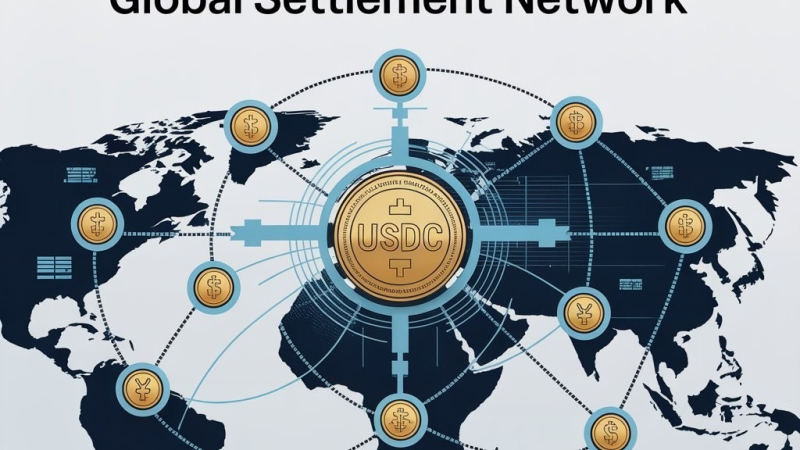
For multinational merchants and platforms, Visa has signaled that blockchain rails could sit alongside established systems to improve speed and transparency, according to its public materials. The impact may not be cheaper payments in every corridor, but more routing options for liquidity management and reconciliation when local banking hours or correspondent layers add delay. Visa stablecoin positioning in this context may also complement push-to-card and account-to-account methods under Visa Direct, which Visa markets as a real-time payouts network for eligible endpoints. Competitive pressure could increase as peers invest in similar rails. Execution is likely to depend on partner onboarding, clear custody responsibilities, compliance checks, and transaction monitoring that can scale.
Tokenization opportunities and operational constraints
Visa stablecoin and tokenization efforts are described as extending beyond consumer payment credentials toward programmable settlement and tokenized representations of value, based on Visa’s framing. This could support faster post-trade workflows, collateral movement, and corporate treasury operations if legal and accounting treatment remains clear. Industry experimentation with tokenized bank money also points to shorter settlement windows in specific use cases, as described in Tokenized Deposits Push Faster Bank Settlement Rails. At the same time, integration can introduce constraints around chain interoperability, smart contract risk, and operational resilience, because payment networks are judged on uptime, exception handling, and dispute processes across many jurisdictions.
What to watch next for regulated adoption
Visa has positioned blockchain settlement as an enterprise feature that would be governed like other payment rails, with defined responsibilities across issuers, acquirers, and processors, according to its public statements. For U.S. policy context, CoinDesk’s June 15, 2026 opinion If America wants to lead in crypto, it must protect the people who build it highlights regulatory and talent considerations. The longer-term question is whether regulated institutions move these tools into production flows beyond pilots while maintaining auditability and consumer protections. CFOs and risk teams may assess determinism, integration cost, and regulatory posture rather than market hype. In Europe, broader market structure efforts also matter for tokenized rails, as covered in EU Tokenization Drives Capital Market Efficiency Gains.