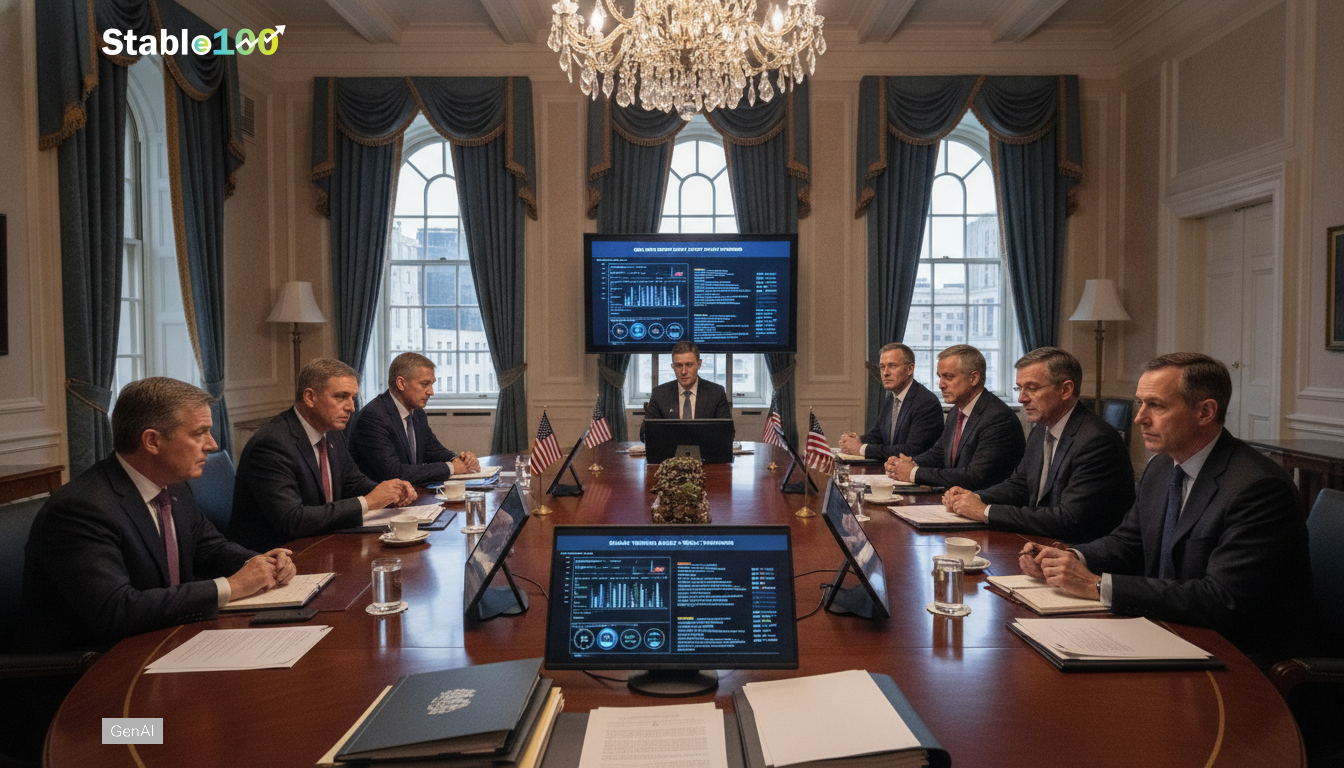
US and UK Treasuries align tokenization roadmap
The US and UK Treasuries appear to be moving from broad coordination to more specific deliverables on onchain market structure, according to recent public-facing summaries and reporting on the policy track. In the latest alignment described by industry coverage, the US and UK Treasuries have framed tokenization as a payments and securities infrastructure project rather than a niche pilot. Officials are described as emphasizing interoperability between jurisdictions, including consistent definitions for tokenized claims, stablecoin reserves, and settlement finality. The collaboration is also described as focusing on supervisory coordination, so firms do not face conflicting expectations when issuing instruments across borders. Market participants have repeatedly called for clearer pathways for regulated experimentation—particularly around custody, transfer-agent functions, and reporting, according to industry commentary. The near-term focus is presented as reducing legal uncertainty that can slow or prevent production deployments by banks and asset managers.
What the roadmap from US and UK Treasuries covers
The announcement is described as setting out workstreams that Treasury teams can use to sequence guidance with regulators and standard setters. For context on adjacent policy tracks, a recent explainer on Stablecoin regulation: ABA challenges CLARITY yields shows how banking trade bodies are framing yield and reserve clarity in the United States. A related discussion is already active among industry groups watching stablecoin perimeter questions and tokenized collateral practices, according to trade and policy commentary. A parallel internal brief, US-UK collaboration to harmonize tokenization rules, describes how consistent definitions and supervision could narrow compliance gaps for issuers and intermediaries.
Market plumbing and settlement standards in focus
In industry reporting, officials are described as signaling engagement with market-plumbing initiatives, including progress on tokenized settlement rails. CoinDesk reported on July 15, 2026, that the Depository Trust and Clearing Corporation moved tokenized securities into live trading, marking a milestone for Wall Street pilots, as described in DTCC moves tokenized securities into live trading. Related international experimentation is also tracked in Tokenized Treasury Bonds: South Korea CBDC Test Plan, which illustrates how cross-border standards can influence the pace at which pilots scale. This is significant because firms have been seeking clearer expectations on settlement finality, reporting, and operational controls when tokens represent regulated instruments, according to market participants and policy commentary. The US and UK Treasuries are portrayed as aiming to reduce friction between policy guidance and implementation needs.
Implications for issuers, banks, and investors
For global investors, the immediate effect may be a clearer signal about regulatory tolerance for production-scale tokenization, provided controls match traditional market safeguards, as suggested by industry interpretations of the joint workplan. By centering tokenized assets in a shared workplan, the US and UK Treasuries could reduce the risk that parallel rulemaking produces incompatible requirements for issuance, disclosure, and post-trade reporting, according to the same policy-focused briefs. For banks planning platform builds, Stablecoin Strategy for Banks: Planning for 2026 frames how reserve transparency, auditability, and integration planning are becoming common prerequisites discussed for scaling tokenized settlement. Asset managers exploring tokenized-fund formats are observing whether the two governments align on how tokenized shares are recognized and redeemed, according to market commentary.
Challenges to execution and next milestones
Execution may depend on aligning multiple agencies without creating duplicative oversight or fragmented technical standards, as observers of cross-border regulatory efforts often note. Key challenges in tokenization policy discussions include supervising smart-contract upgrades, handling operational outages, and assigning liability when tokenized instruments move through layered service providers. Industry and policy commentary suggest that joint work can standardize disclosure for reserve assets, clarify custody segregation for tokenized securities, and set expectations for controls over permissioned transfers. The roadmap is also described as potentially streamlining cross-border testing so firms can demonstrate compliance once and then deploy in both markets. To maintain credibility, the US and UK Treasuries will likely need to publish measurable milestones and coordinate with relevant regulators on oversight posture, while aiming to keep protections comparable to traditional finance in 2026.