Poland sanctions bill and digital finance regulation
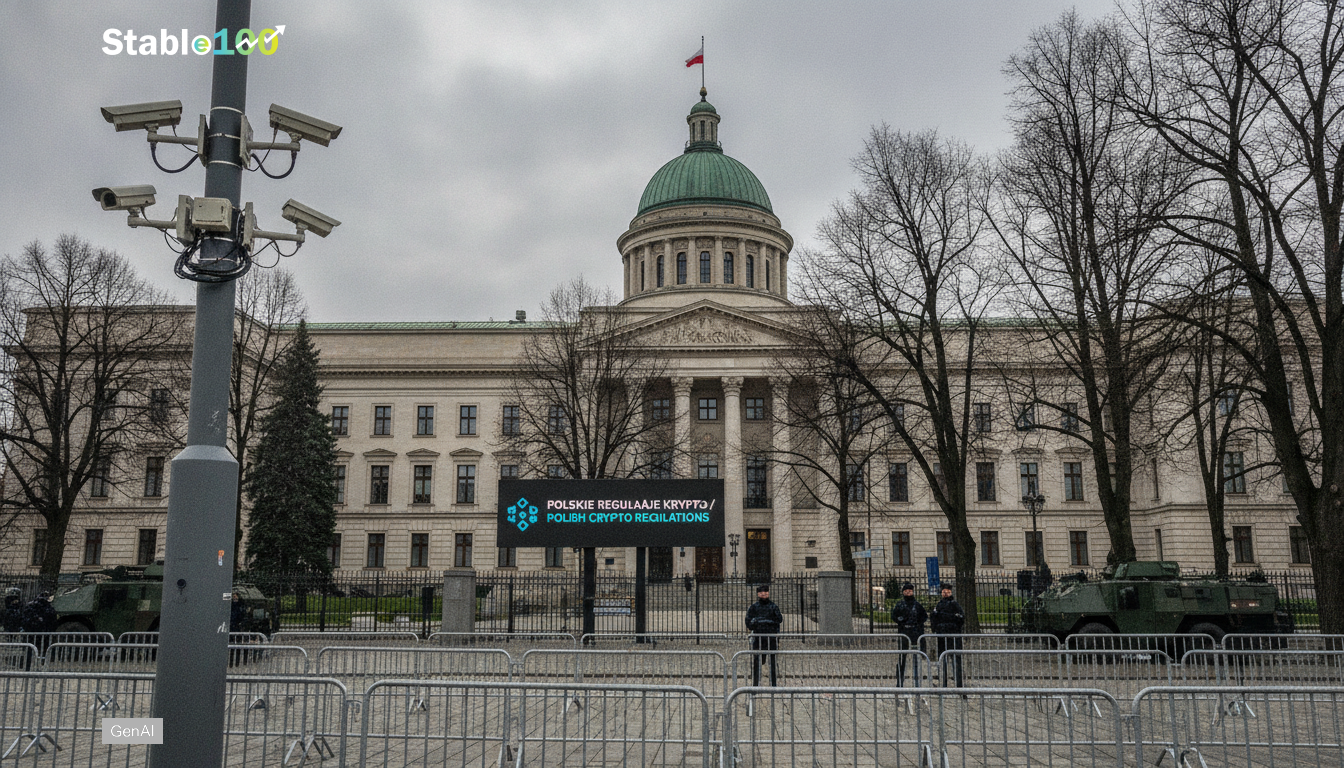
Poland’s lower house advanced a sanctions bill that, based on available reports from parliamentary materials, is intended to strengthen how authorities can enforce restrictive measures across modern payment rails, including crypto-related activity. The move is presented as aligning domestic rules with EU sanctions practice, with the documentation indicating broader coverage for asset controls and related compliance duties. Lawmakers described the update as an operational clarification of responsibilities for firms that custody or transmit value. According to the available justification, the emphasis is on enforceability and readiness rather than introducing an entirely new penalty regime. This situation is likely to increase expectations for crypto-sector compliance processes under Poland’s evolving digital finance regulation landscape. The bill now moves through Poland’s standard legislative steps before it can take effect.
How the bill expands crypto freeze powers
For crypto firms operating in Poland, the practical shift is that the bill would create a more explicit legal basis for freezing crypto assets when a sanctioned person is identified, as indicated by available reports. This coverage extends beyond traditional bank accounts to certain assets on distributed ledgers, including custodial holdings managed by exchanges and wallet providers. Recent security headlines have also raised sensitivity to operational risk, including Binance hack crypto price drop prompts Fed, OCC probe, as firms reassess how a freeze order would flow through custody, settlement, and withdrawals. As a result, firms may need to reassess whether controls can be applied promptly while preserving audit trails.
Compliance expectations for exchanges and wallets
Industry responses, as discussed by compliance practitioners, focus less on the principle of sanctions and more on technical clarity and due process for implementation under digital finance regulation. Compliance teams note that effective freezes depend on precise definitions of control, custody, and beneficial ownership, particularly where assets sit in omnibus wallets or pooled custody structures. Operators also flag complexity around self-hosted wallets and multi-signature arrangements, where screening signals may not map neatly to enforcement steps. Many firms are benchmarking Poland’s direction against other jurisdictions and rulebooks, including Crypto regulation: stablecoins, tokenization, uncertainty and Russia Crypto Law Influences Moscow Exchange’s USDT, BTC Trades. A common request is more detailed guidance that can be audited and tested in drills.
Legal process, appeals, and proportionality risks
Any courtroom friction could center on proportionality, notice, and the mechanics of contesting a freeze once executed, as legal practitioners often warn in sanctions-related enforcement contexts. Comparable debates have surfaced in other regulated onchain contexts, including broker-dealer controls, as described by CoinDesk in Plume affiliate gets the legal green light to trade regulated security entitlements onchain. Polish administrative procedure and EU fundamental rights standards may require that affected parties have a workable route to challenge restrictions, especially if third-party assets are affected through shared wallets or pooled accounts. Practitioners also note that statutes can stumble when they mandate outcomes without specifying operational constraints, such as the evidentiary threshold that triggers action and the timelines for compliance. Clear appeal channels could reduce litigation risk and make digital finance regulation outcomes more predictable.
What changes next for Poland’s crypto market
If enacted as reported, the bill could tighten expectations for screening, recordkeeping, and cross-border coordination, particularly where freezes must be mirrored across affiliates and service providers. Regulators typically expect firms to demonstrate that controls work under stress, so platforms may need tested playbooks for isolating funds while preserving evidence trails and access logs. The measure may also increase the likelihood that sanctions monitoring is integrated more deeply with transaction risk models and custody architecture as Poland’s digital finance regulation posture develops. For users, the near-term effect could be greater scrutiny of counterparties rather than new consumer features. For platforms, the strategic impact is likely higher compliance cost paired with clearer enforcement signals, alongside alignment pressures visible in other licensing regimes such as Nigeria crypto regulation: licensing rules and stablecoin ban.